
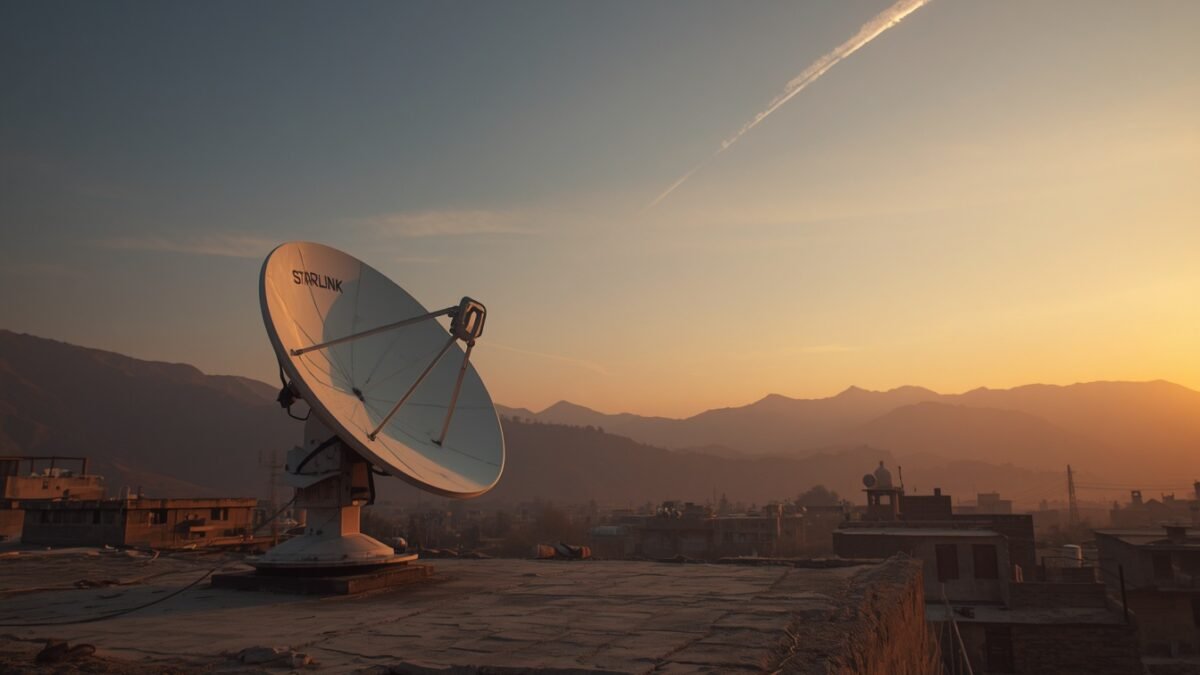
Starlink Pakistan Price 2026:
Few tech topics get Pakistanis as excited as Starlink. Elon Musk’s satellite internet promises fast broadband anywhere, from a village in Tharparkar to a home in Gilgit, with no fibre cable needed. The two questions everyone asks are: what is the Starlink Pakistan price, and when will it actually launch?
This article gives you the honest picture as of September 2026: the expected packages and hardware cost, where the licensing process stands, and whether Starlink will be worth it for an ordinary household, a freelancer or a small business.
Starlink Pakistan Price: Expected Packages
Starlink has not officially published Pakistan pricing yet. The figures below are the packages widely reported in Pakistani media since 2025. Treat them as estimates until Starlink lists Pakistan on its official website.
| Package | Expected monthly fee | One‑time hardware |
| Residential (50–250 Mbps) | around Rs. 35,000 | around Rs. 110,000 |
| Mobility / Roam | around Rs. 50,000 | around Rs. 120,000 |
| Business | around Rs. 95,000 | around Rs. 220,000 |
More recent industry commentary in 2026 suggests residential plans could land somewhere between Rs. 25,000 and Rs. 35,000 a month once taxes are included. Either way, Starlink will be a premium service, far more expensive than a standard fibre or 4G connection in cities.
Has Starlink Launched in Pakistan?
Not yet. Here is where things stand:
- April 2026: The Pakistan Telecommunication Authority (PTA) introduced a new Fixed Satellite Services licence framework, creating a single route for satellite companies to offer internet directly to consumers.
- August 2026: Reports said the satellite internet rules were heading to the federal cabinet for approval.
- September 2026: The PTA chairman said no satellite internet case is currently pending with the authority, because the Pakistan Space Activities Regulatory Board is still finalising its framework.
According to the PTA, a satellite internet company must complete four steps before launch:
- Approval from the Securities and Exchange Commission of Pakistan (SECP),
- A licence from the Pakistan Space Activities Regulatory Board,
- Approval from the Ministry of Interior,
- Final processing and licensing by the PTA.
So the launch is getting closer, but there is no confirmed date. Be careful with websites and videos claiming that Starlink “is now available” in Pakistan. Official availability will appear on Starlink’s own website.
5 Honest Facts About Starlink in Pakistan
1. It will not replace cheap city internet
If you live in Lahore, Karachi or Islamabad with access to fibre, your current connection will almost certainly be much cheaper per month. Starlink’s real value is in areas where good internet simply doesn’t exist.
2. The biggest winners are remote areas
Villages, mountain regions, farms, construction sites and remote schools could get reliable broadband for the first time. For these places, Starlink could genuinely change lives.
3. Taxes will push the price up
Reports suggest operators will face a combined revenue burden of around 8.5%, including licence, Universal Service Fund and spectrum charges plus a space‑development levy. On top of that come the normal taxes on internet services, so the final consumer price will be higher than the base package.
4. Competitors are coming too
The PTA framework is not only for Starlink. Other low‑earth‑orbit providers, such as Amazon’s Project Kuiper and OneWeb, could also apply. More competition could bring prices down over time.

5. Local rules will apply
Operators will be required to set up a gateway earth station in Pakistan and route domestic traffic locally. That means Starlink will operate under Pakistani regulations, including lawful access requirements.
Is Starlink Worth It for Freelancers?
This is the question many of our readers ask. For a freelancer in a small town with frequent internet outages, a reliable connection directly affects income. Missing a client call or a deadline because the internet is down can cost you a job.
Here is a simple way to decide:
- If your monthly online income is well above the package price, and you lose work because of bad internet, Starlink could pay for itself.
- If you are just starting out, stick with a good 4G device or fibre plus a backup SIM. Focus on building income first.
Starting out? Our guides on freelancing in Pakistan and how to create a Payoneer account are the best place to begin.
Starlink vs Other Internet Options in Pakistan
| Option | Typical cost | Best for |
| Fibre broadband | Low to moderate | City homes and offices |
| 4G home devices | Low | Students, light users |
| Mobile data bundles | Low | Backup connection |
| Starlink (expected) | High | Remote areas, businesses that need uptime |
How to Prepare for the Launch
- Check coverage on Starlink’s official map once Pakistan is listed.
- Plan your budget for both the hardware and at least six months of fees.
- Think about placement. The dish needs a clear view of the sky, so rooftops are ideal.
- Consider sharing. A small office, a group of freelancers or several families could share one business connection to split the cost.
- Ignore pre‑order scams. Nobody can legally sell Starlink subscriptions in Pakistan before the official launch.
What Speeds Can You Expect?
Reported residential packages mention speeds of roughly 50 to 250 Mbps. In real life, satellite speeds depend on:
- Network congestion in your area (more users can mean slower speeds at peak times),
- Weather, since heavy rain or storms can briefly affect the signal,
- Obstructions such as trees, walls or tall buildings blocking the dish’s view of the sky,
- Your plan type, because business plans usually get priority over residential ones.
Latency on low‑earth‑orbit satellites is much lower than old satellite internet, which means video calls, online classes and even most online games work well.
Who Should Wait, and Who Should Be Ready
Wait if you: – already have stable fibre or cable internet, – mainly use the internet for social media and streaming, – are on a tight monthly budget.
Be ready on launch day if you: – live in a remote or mountainous area with no reliable internet, – run a business that loses money every time the internet goes down, – manage a remote school, clinic, farm or construction site, – work online and need a dependable backup connection.
Will Prices Come Down Later?
In many countries, Starlink has adjusted prices after launch, offered cheaper “lite” or regional plans, and run hardware discounts. Once competitors like Amazon’s Project Kuiper enter Pakistan, pressure on prices should increase. So even if the first packages are expensive, they may not stay that way forever.
Final Thoughts
The Starlink Pakistan price is expected to be around Rs. 35,000 a month for a residential plan, with hardware costing over Rs. 100,000, although official pricing has not been announced yet. As of September 2026 the licensing process is still underway, and several approvals are needed before launch. For most city users it will be an expensive luxury, but for remote areas and serious businesses it could be a game changer.
We will update this article when official prices are announced. Meanwhile, see how tech costs compare in our PTA tax on iPhone 17 Pro Max guide, or explore online earning apps in Pakistan.
Sources and official links: Starlink official website, Pakistan Telecommunication Authority, ProPakistani report on PTA conditions.
FAQ
What is the Starlink price in Pakistan per month?
Official pricing is not out yet. Reported estimates put the residential package at around Rs. 35,000 per month.
How much does the Starlink dish cost in Pakistan?
The residential hardware kit is expected to cost around Rs. 110,000.
When will Starlink launch in Pakistan?
There is no official date. As of September 2026, approvals from several bodies, including the Space Activities Regulatory Board and the PTA, are still pending.
Can I buy Starlink in Pakistan now?
No. Any website or seller offering Starlink subscriptions in Pakistan before the official launch should be treated as a scam.
Is Starlink faster than fibre?
Usually not. Good fibre is typically faster and cheaper. Starlink’s advantage is availability in places fibre cannot reach.




Comments